Drawing Course for Beginners in Warsaw – Where Should You Start?
Many people postpone learning to draw because they believe they lack talent or the necessary skills. In reality, most beginner drawing courses in Warsaw are designed specifically for people who have never studied drawing before or have only drawn as a hobby.
The first lessons are not about creating complex portraits or architectural sketches. Instead, the goal is to understand the fundamentals of observation, proportions, and the way we perceive objects. These essential skills form the foundation for further artistic development.


Is Previous Experience Necessary?
No. A well-designed course assumes that participants are starting from scratch. The instructor does not expect prior knowledge of perspective, anatomy, or composition.
At the beginning, the main focus is on developing the right habits. These include not only drawing itself, but also observing shapes, comparing proportions, and consciously working with light and shadow.
At Mara Art Studio, people enrolling in their first drawing course often ask whether they should practice at home beforehand. It isn't necessary. Following a structured program under the guidance of an instructor is far more effective than randomly copying drawings found online.
What Do the First Weeks of the Course Look Like?
The beginner program progresses step by step. The instructor does not immediately move on to advanced topics, as most of them are built upon the same fundamental principles.
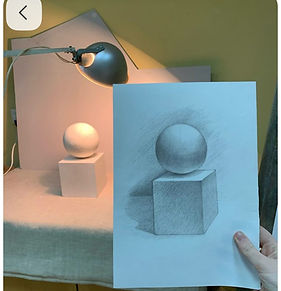
The first exercises focus on simple geometric forms. Participants learn to judge proportions, draw accurate lines, and build light and shadow. Although these exercises may seem simple, they make it much easier to draw more complex objects later on.
Only after mastering the basics do students move on to still lifes, architectural elements, plants, and the human figure. The learning process is gradual, with each lesson building on the skills developed in previous classes.

What Materials Will You Need?
Many beginners assume they need to purchase a professional set of pencils and paper right away. In practice, getting started is much simpler.
For the first exercises, basic materials are sufficient: a few pencils of different hardness, a sketchbook, and an eraser. If the studio provides the equipment, participants can focus entirely on learning and decide later which tools they would like to purchase for independent practice.
A good course also explains why specific tools are used. For example, the difference between soft and hard pencils becomes much clearer when working with shading techniques.
Why Is It Better to Learn in a Small Group?
Drawing is difficult to master simply by watching the instructor. The teacher should be able to approach each participant individually and demonstrate what needs improvement.
In a smaller group, it is easier to discuss mistakes related to proportions, perspective, or the direction of light. Sometimes a small adjustment to the placement of an object on the page is enough to make a drawing look much more natural.
The goal is not to grade the artwork. Individual feedback helps participants understand the drawing process itself rather than simply correcting a single sketch.


Does Age Matter?
Beginner drawing courses are popular among recent high school graduates, university students, and adults who have decided to return to drawing after many years.
Adults often approach learning differently than children. Some want to develop a hobby, while others are preparing for entrance exams to art schools. Every motivation is equally valid, provided the course matches the participant's goals.
It is also important not to compare your learning pace with others in the group. Some people grasp perspective more quickly, while others find observing light or composition easier. This is a natural part of the learning process.
What Should You Consider Before Enrolling?
Before choosing a course, it is worth checking several practical details. The program should clearly describe the number of sessions, the duration of each class, and the topics covered. It is also important to know the group size and whether materials are included in the course fee.
If you plan to attend classes regularly, the studio's location also matters. Since the course runs for several weeks or even months, convenient access by public transport is often more important than saving a few minutes on the length of each lesson.
It is also worth finding out whether you can continue your studies at a higher level after completing the beginner program. This allows you to develop your skills without having to look for a new studio.
A beginner drawing course is not designed to teach everything in just a few sessions. Its purpose is to build solid foundations and show that drawing is a skill that can be developed step by step. A well-structured curriculum, regular practice, and feedback from the instructor help students make progress much faster than most people expect before starting.
