Why Are Proportions the Foundation of Good Drawing?
- Aug 2
- 4 min read
Updated: Aug 3

People who begin learning to draw often focus on details. They carefully render eyes, hair, fabric textures, or architectural elements, yet the final result still appears unnatural. In many cases, the reason is simple-incorrect proportions.
They are what determine whether a drawing looks believable, even if it is only a sketch made up of simple lines.
The ability to recognize the relationships between different elements develops gradually. It is not a talent reserved for a select few but one of the fundamental skills that can be built through regular practice.
That is why people who want to improve their artistic abilities consciously often choose a drawing course, where learning begins with building accurate proportions and developing careful observation.

Why Are Proportions More Important Than Details?
At the beginning of the learning process, many people believe that the quality of a drawing depends on the number of details. In reality, viewers perceive the overall image first.
If the head is too large compared to the torso, a cup has an unnatural shape, or a building appears tilted, even beautifully rendered details will not improve the overall impression.
Proportions create the structure of a drawing. They can be compared to the foundation of a building-before adding finishing touches, everything must first be planned correctly.
For this reason, the first lessons usually involve spending more time observing than actually drawing. The ability to see accurately turns out to be one of the most important parts of the learning process.

Drawing Is More About Measuring Than Guessing
One of the biggest discoveries for beginners is that experienced artists do not rely on memory or intuition. Instead of guessing, they constantly compare.
Among other things, they check:
the height of one element in relation to another,
the angle at which lines run,
the exact center of an object,
the amount of space between different parts of the composition.
Making these comparisons helps eliminate many mistakes before detailed rendering even begins.

Why Do Beginners Struggle with Proportions?
The human brain does not draw what it actually sees. Much more often, it relies on familiar mental patterns.
A child draws a house with a triangular roof and square windows not because they are carefully observing a real building, but because that is how they imagine a house. The same mechanism also affects adults who are just beginning to learn drawing.
Portrait drawing is a good example. Most people automatically place the eyes too high, make the nose too short, and position the mouth too low. This is not caused by a lack of talent but by drawing an internal image of a face instead of its actual proportions.
Only consistent practice teaches students to observe a model or photograph objectively.

How Can You Learn Proportions Without Frustration?
One of the most common mistakes is starting with the part that seems the most interesting. Someone begins with an eye in a portrait, another person starts with a car wheel or a single leaf in a still life.
The opposite approach produces much better results.
First, it is worth defining the overall shape of the object. Then establish its height and width, mark the main axes and the largest divisions. Only after that should you gradually move on to the smaller elements.
This approach allows corrections to be made at an early stage. The more details added to an incorrectly constructed sketch, the more difficult it becomes to fix the drawing later.

Do Proportions Only Matter When Drawing People?
This is one of the most common questions asked during drawing classes. The answer is simple: no.
Proportions are essential in every type of drawing.
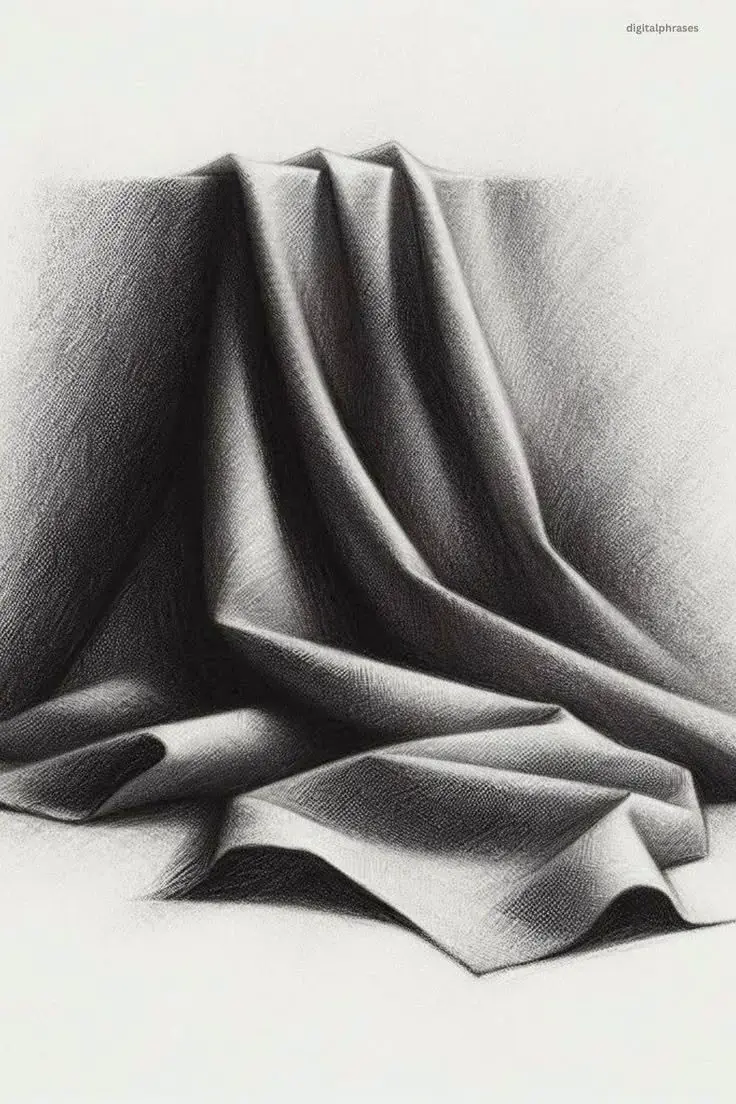
In still life, they determine the size relationships between dishes, fruit, and fabrics. In architectural drawing, they define the relationships between windows, doors, and the façade. In landscape drawing, they help maintain accurate distances and the proper scale of trees, buildings, and mountains.
Even drawings with a more expressive or stylized character rely on a conscious understanding of the relationships between elements within the composition. This keeps the entire artwork visually consistent, even when it is not intended to achieve photographic realism.

How Do Observation Skills Improve?
At the beginning, almost everyone makes similar mistakes. Individual lines may appear correct on their own, but the drawing as a whole loses its proper proportions. This is a natural stage of learning.
Over time, the eye begins to notice increasingly subtle relationships. It becomes easier to see that one element is slightly too wide or that the angle of a line differs from reality by only a few degrees.
These improvements do not happen overnight. They result from many short exercises that develop not only hand control but, above all, the accuracy of observation.
That is why instructors place so much emphasis on simple sketches. Although they may not look impressive, they build the skills that later translate into more advanced artwork.
Why Is It Worth Spending Time Learning Proportions?
A solid understanding of proportions makes it much easier to learn all subsequent topics, including perspective, light and shadow, anatomy, and composition. It also helps artists understand why a drawing looks convincing and how to identify and correct their own mistakes.
People who practice regularly often notice that, over time, they stop focusing solely on controlling the pencil. Careful observation, analysis, and the gradual construction of the entire form become far more important. This is the stage where drawing becomes less accidental and much more intentional.
Proportions are therefore much more than just a technical rule taught in drawing courses. They represent a fundamental way of seeing the world and provide the foundation upon which all other artistic skills can be developed.
Thanks to accurate proportions, even a simple sketch becomes convincing, and learning to draw turns into a far more structured, rewarding, and enjoyable process.


